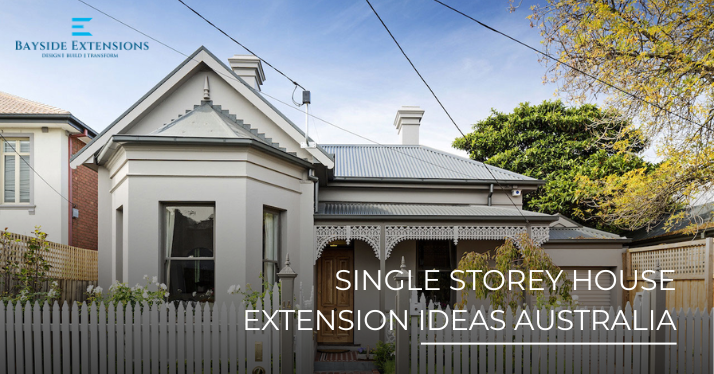
Single Storey House Extension Ideas Australia
CategoriesHome Extensions

Single Storey House Extension Ideas Australia

Running out of space at home is something many people deal with. You might love where you live, the street, the suburb and even your neighbours, but the house just doesn’t feel big enough anymore. That’s where a house extension starts to make sense.

Instead of moving, more homeowners are choosing house extensions and renovations to create extra space that fits their lifestyle. Whether it’s building an extension on a house for a growing family or simply building a home extension to improve how the space works, the idea is simple: make your current home fit your lifestyle needs 

In Australia, especially in cities like Melbourne, including areas like Brighton East or Bentleigh East, options like home extension projects are becoming more common. A well-planned household extension can change how you use your space without the stress of relocating. 

If you’re thinking about adding an extension to a house, here are some ideas and things to consider.

Why Choose a Single-Storey House Extension?

A single-storey house extension is often the first choice for many homeowners. It’s usually simpler than a double-storey extension and often blends more naturally with the existing layout.

When building a single storey extension you should 

  • Keep the design connected to your current space
  • Avoid major structural changes
  • Connect the indoor and outdoor areas 

For many people, building a home extension this way feels more manageable. It also works well for small home extensions projects in Melbourne where space needs to be used wisely.

Ideas for extending a single-story house in Australia

Open Plan Living Extension

One of the most popular home extension ideas Australia offers is creating an open-plan living area. This type of house extension removes the feeling of cramped rooms and opens everything up. When adding an extension to a house, combining the kitchen, dining, and living space can make a big difference.

Many house extensions and additions today focus on this layout because it:

  • Brings in more natural light
  • Makes the home feel bigger
  • Improves everyday flow

Even in small home extensions Melbourne, this idea works well when space is limited.

Kitchen Extensions That Actually Work

The kitchen is often the busiest part of the home and is often described as the heart of the home So it makes sense that many room extensions focus on expanding this area.

When building an extension on a house, extending the kitchen gives you more room to cook, move, and store things. A good home extension design here can completely change how the space feels.

A home extension centred around the kitchen can include 

  • Extra bench space
  • A dining area
  • Better storage
  • A butler’s pantry
  • This is one of the most practical home extension ideas Australian homeowners choose.

Indoor-Outdoor Living Spaces

In Australia, outdoor living is part of everyday life. That’s why many house extensions and additions are designed to connect indoor and outdoor areas. When building a home extension, adding large doors that lead to the garden or outdoor area can make the home feel more open.

This type of house extension works well for:

  • Family gatherings
  • Relaxing evenings
  • Entertaining guests

Even for small home extensions Melbourne, this idea can create a bigger feel without needing extra space due to the ease of moving between the indoor and outdoor spaces 

Extra Bedroom or Guest Room

Sometimes, the need is simple, just an extra room. Many homeowners look at room extensions when they need:

  • A guest bedroom
  • A space for a growing family
  • A home office

When adding an extension to a house, creating a new room is one of the most direct solutions. A thoughtful home extension design ensures the new space doesn’t feel disconnected from the rest of the house

Compared to a double-storey extension, a single-storey option keeps everything on one level, which is often more convenient.

Small Extensions That Make a Big Difference

Not every house extension needs to be large. In fact, small home extensions Melbourne projects show how even a small change can improve daily living.

A compact house extension might include:

  • Extending a living room slightly
  • Adding storage space
  • Creating a study corner

These types of house extensions and additions are great when you don’t want to change too much but still need to make better use of the existing space. When building a home extension, even a small upgrade can make your home feel more comfortable.

Planning Your Home Extension Design

Before starting, it’s important to think about your home extension design.

Ask yourself:

  • What do I really need more space for?
  • How will this space be used daily?
  • Will it connect well with the rest of the home?

A good plan makes building an extension on a house much smoother. Whether it’s a simple layout or something more detailed, the design should address your lifestyle requirements for your home 

Also, while some consider a double-storey extension, many find that a single-storey approach works better for their needs and budget.

Single vs Double Storey Extensions

It’s a good idea to look at all of your options.

A double-storey extension adds space up and down, but it may cost more and takes more time.

An extension to a one-storey house:

  • It is easier to put together
  • Keeps everything on the same level
  • Works well for most families

This is why a lot of home extension ideas in Australia focus on single-level designs, especially for small home extensions in Melbourne.

Planning A Home Extension In Melbourne?

Bayside Extensions will make sure sure that your home extension is done right from start to finish. Our approach is simple, we guide you through the extension process from design to construction whilst keeping the whole process in house, we design, build and transform your home into a more liveable space

FAQs

The timeline for building a home extension depends on the size and design. A simple house extension can take a few months, while larger house extensions and renovations may take longer. Planning approvals and permits can also add extra time.

Yes,  adding an extension to a house can increase value if it improves livability in the space. Well-planned room extensions or open living areas are often more appealing to buyers.

It depends on your needs; many people choose open-plan living or kitchen upgrades as part of their home extension design. Others prefer extra bedrooms or workspaces through room extensions and renovations

In some cases, yes; for small home extensions, you can often stay in the house. But for bigger household extension work, it may be easier to move out for a short time.

Before building an extension on a house, think about your budget, space, and how the new area will connect with your existing layout. A good home extension design should feel like part of your home, not something separate.

Our approach to home  extensions and renovations is a 100% in house service From assessing the feasibility of your project to the Design, permits and build, including interior design services, at Bayside Extensions we do it all.

Home extension ideas for growing families in Melbourne
CategoriesHome Extensions

Home extension ideas for growing families in Melbourne

Families grow fast; one minute your home feels just right, and the next it starts to feel tight. Maybe the kids need their own space, or you just want a bit more room to breathe.

 Instead of going through the stress of moving, many people are now turning to smart home extension ideas to make better use of the space they already have. Across Melbourne, the focus for house extensions is simple; to make homes work better for everyday life. 

From practical living room extension ideas that bring everyone together to clever small house extension ideas that make the most of limited space, there are plenty of ways to improve your home without starting over. 

The goal is to create a space that fits your routine, supports your family, and still feels like home.

Smart Home Extension Ideas for Growing Families

Open Up Your Living Area

One of the most common living room extension ideas is opening up the main living space. Instead of having small separate rooms, you can create one large area for relaxing, cooking, and spending time together.

This works well for families because:

  • You can keep an eye on the kids while cooking
  • It brings in more natural light
  • It feels less crowded during busy hours

If you are exploring home extension ideas, this is often a good starting point.

Add a Second Storey

If you don’t have much space around your home, building up is a smart move. A second-storey extension can give you extra bedrooms, a study area, or even a small lounge.

This is one of the more popular home extension ideas for families who want to stay in the same area but need more room. It also works well for smaller blocks, making it a good fit under small house extension ideas. It’s especially useful for homeowners who don’t want to sacrifice valuable backyard space while still creating an extra living area. 

Extend the Kitchen and Dining Space

The kitchen often becomes the busiest part of the house. Kids doing homework, quick meals, family chats, it all happens here.

That’s why extending the kitchen is one of the most practical living room extension ideas, especially when it connects with the dining area.

Here’s what you can do:

  • Add more bench space
  • Create a small island for meals
  • Open it up to the backyard

This type of extension fits well into both large and small house extension ideas.

Create a Family Room or Play Area

As families grow, having a separate space for kids can make daily life easier. A small family room or play area gives children their own space without taking over the whole house.

This is one of those home extension ideas that doesn’t need a lot of space but makes a big difference. Many house extensions in Melbourne include this kind of room because it helps keep things organised.

Even within small house extension ideas, you can create a simple and useful play zone.

Bring the Outdoors In

Melbourne summers can be perfect for indoor-outdoor living. Extending your living space towards the backyard can give your family more room to relax.

Some easy living room extension ideas include:

  • Adding large sliding or bi-fold doors
  • Creating a covered outdoor area
  • Extending the living room into an alfresco area 

This is a simple way to expand without a full build. Many house extensions Melbourne projects use this idea to create more space without major changes.

Add a Bedroom for Growing Needs

At some point, extra bedrooms become a need. Whether it’s for kids, guests, or even a home office, adding a bedroom is one of the most common home extension ideas.

In Melbourne, house extensions are often planned so that the flow of the house stays simple. Even with small house extension ideas, a well-designed bedroom can fit in without making the house feel cramped.

Create Space That Works for Your Family

If your home is starting to feel cramped, it might be time to look into easy and useful ways to make it bigger. If you have the right ideas, you can make room without losing the comfort of your current home.

Bayside Extensions is all about house extensions in Melbourne. The goal is to help you build a space that fits your life, whether you’re looking for ideas for home extensions, planning house extensions in Melbourne, or looking for small house extension ideas.

FAQ

Some of the most common home extension ideas include open-plan living areas, extra bedrooms, kitchen extensions, and outdoor living spaces. These ideas are popular because they impact how families actually live day to day.

Yes, small house extension ideas are often worth it, especially if you plan them well. You don’t always need a big build to see a real difference. Even a small extension can make your home feel more comfortable.

Yes, most house extensions in Melbourne do need planning, but it doesn’t have to feel overwhelming. But the good thing is that the design team at Bayside Extensions make this easy for the homeowner. Also, the key is to plan everything together, not in parts. That’s also why many homeowners choose full-home renovation services instead of handling things separately.

No, we do not offer single-room renovation services. At Bayside Extensions, every project is approached as part of a broader home renovation to ensure a consistent and well-planned outcome. While it does not need to be a full home renovation, projects typically involve multiple spaces. 

For example, a common request may include upgrading the kitchen, living, dining, and laundry areas together. In other cases, it may involve creating a master suite while reconfiguring existing bedrooms, bathrooms, and wardrobes to improve layout, flow, and overall functionality.

Second-Storey Extension
CategoriesHome Extensions

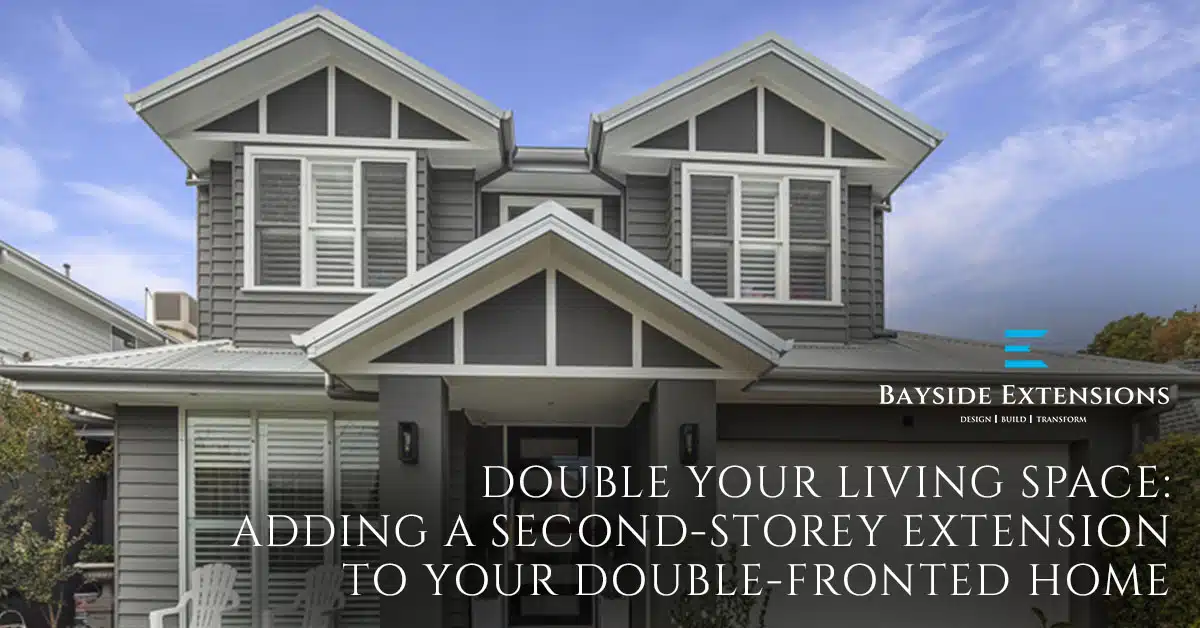
Double Your Living Space: Adding a Second-Storey Extension to Your Double-Fronted Home

Before we delve into the world of second-storey extensions for double-fronted homes, let’s set the stage. Picture your charming double-fronted house nestled in one of Melbourne’s cosy neighbourhoods. You love its character, and the history it holds, but there’s one thing it lacks – space. This is where a second-storey extension comes to the rescue.

The Charm of Double-Fronted Homes

Double-fronted homes are iconic in Melbourne, known for their symmetrical facades and timeless appeal. They often boast beautiful period features, high ceilings, and a touch of old-world charm. However, as families grow and modern living demands more space, these homes sometimes need a little extra room to breathe. That’s where a well-planned second-storey extension can work wonders.

Planning Your Second-Storey Extension

The first step in this transformative journey is to understand your space needs. Take a closer look at your current living situation. Are your kids sharing bedrooms? Do you need a home office? Identifying your needs helps shape the extension project.

In Melbourne, adding a second storey isn’t as simple as stacking blocks. You’ll need to navigate through local regulations and zoning laws. It’s crucial to understand what you can and cannot do within your property’s constraints.

Budgeting is where dreams meet reality. How much are you willing to invest in this extension? A clear budget will guide your decisions and ensure your project stays on track.

Designing Your Dream Second Storey

When planning a second-storey extension, it’s vital to maintain the architectural harmony of your double-fronted home. An experienced architect can help blend the new with the old seamlessly.

Melbourne’s love affair with natural light is well-known. Design your extension to harness abundant sunlight, creating bright and airy spaces that are a joy to inhabit.

While aesthetics are crucial, functionality shouldn’t be compromised. Consider how the new space will be used and design accordingly. A harmonious balance ensures your extension becomes an integral part of your home.

Construction Considerations

Adding a second storey isn’t just about stacking bricks; it’s about ensuring your home’s structural integrity. A professional engineer can help determine if your existing foundation can support the added weight.

Choose building materials that align with your sustainability goals. Melbourne appreciates eco-friendly construction, and using sustainable materials can be both cost-effective and environmentally responsible.

Living through a renovation can be challenging. Discuss strategies with your builder to minimise disruption to your daily life during construction.

Navigating Legalities and Approvals

Before breaking ground, you’ll need the right permits. Navigating Melbourne’s permit process can be complex, but it’s essential to ensure your project is legal.

Many double-fronted homes fall under heritage overlays, requiring extra care to preserve their historical character. Work with professionals who understand heritage regulations to avoid legal complications.

Local zoning laws can dictate factors like height restrictions and setbacks. Ensuring compliance keeps your project on the right side of the law.

Choosing the Right Builder

Selecting the right builder is a critical decision. Research potential builders thoroughly. Look for experience, a good reputation, and a portfolio that matches your vision.

A builder’s portfolio tells a story of their work. Reviewing it can give you insights into their style and capabilities. Don’t forget to ask for and check references from previous clients.

Before signing on the dotted line, negotiate a clear and comprehensive contract. It should outline the scope of work, timelines, payment schedules, and dispute resolution processes.

The Construction Phase

Effective communication with your builder is key to maintaining a smooth workflow. Regular updates and site visits help ensure your vision is being realised.

Quality control is essential throughout the construction phase. Regular inspections can identify and rectify any issues promptly, ensuring the final result meets your expectations.

No project is without its challenges. Be prepared to adapt to unforeseen issues or changes in plans. A flexible approach can keep your project on track.

Completing Your Dream Second Storey

As your project nears completion, focus on the final touches. Interior design choices, from paint colours to fixtures, can make a significant impact on your new space.

Melbourne values sustainability. Consider energy-efficient solutions like insulation, solar panels, and energy-efficient appliances to reduce your environmental footprint.

Finally, take a moment to savour the transformation. Your double-fronted home has now doubled its charm and functionality. Enjoy the additional space and comfort it provides.

Final Thoughts

With careful planning, a touch of creativity, and the right professionals by your side, adding a second storey to your double-fronted home can be a rewarding journey. It’s a chance to preserve the charm of the past while embracing the needs of the present. 

So, embark on this exciting adventure and watch your home’s potential unfold. Melbourne’s iconic double-fronted homes are about to get even more remarkable.

If you’re considering an extension for your double-fronted home, look no further than Bayside Extensions. Our team can guide you through the process, from design to construction and completion, ensuring a seamless transformation that aligns with your vision. Contact us today to schedule a consultation today.

Please call us on (03) 9596 0368 or leave an enquiry via our online contact form.


Navigating Heritage Overlays for Your Double-Fronted Home Renovation
CategoriesHome Extensions

Navigating Heritage Overlays for Your Double-Fronted Home Renovation

Melbourne’s double-fronted homes are cherished for their classic charm and unique architectural features. These beautiful properties often carry a piece of the city’s history within their walls. However, renovating a double-fronted home in Melbourne isn’t always straightforward, especially when heritage overlays come into play.

In this article, we’ll explore the complexities and opportunities of navigating heritage overlays during your melbourne renovation and home extension journey.

Understanding Heritage Overlays

Firstly, let’s clear up the jargon. Heritage overlays are protective measures put in place by local councils to safeguard historically significant properties and neighbourhoods. These overlays are designed to preserve the architectural and cultural heritage of Melbourne’s diverse suburbs. So, why do they matter when you’re planning a renovation? Essentially, heritage overlays restrict what you can and can’t do to your property to maintain its historical integrity.

Heritage overlays come in various forms, often classified as contributory or non-contributory. A contributory overlay indicates that your property is of particular heritage significance, which means any renovations are subject to stricter guidelines. Non-contributory overlays are less restrictive but still require careful consideration. The type of overlay your property falls under will significantly impact your renovation plans.

Assessing Your Property

Before you pick up a hammer or hire a designer, it’s crucial to research your property’s heritage status. Local council records and historical documents can provide valuable insights. These resources can help you understand your property’s history and any restrictions that may apply.

While your research is essential, it’s equally important to seek professional input. Heritage architects and consultants are well-versed in navigating the complexities of heritage overlays. They can provide a detailed heritage assessment of your property and guide you through the renovation process.

Navigating Regulations

Heritage overlays often use a grading system to classify properties. The grading can range from A (highly significant) to D (not significant). Properties with higher grades face more stringent restrictions. Understanding your property’s grade is crucial as it sets the tone for your renovation plans.

Navigating heritage overlays also involves understanding zoning and building codes specific to your area. These regulations aim to balance heritage preservation with modern living. They outline what you can and can’t do concerning renovations and additions.

Heritage-Friendly Design

Preserving the facade of your double-fronted home is often a top priority. This may involve restoring period features such as decorative mouldings, leadlight windows, or intricate fretwork. Selecting sympathetic materials that match the era of your home is key to achieving an authentic look.

While preserving the past is important, your home should also meet the needs of modern living. Consider hidden upgrades that enhance comfort, such as insulation, heating, and cooling. Adapting the interiors to contemporary lifestyles can make your home more functional while respecting its historical character.

Engaging with Heritage Experts

Collaboration with a heritage architect or consultant is often the wisest course of action. Their experience in working with heritage properties can be invaluable. They can help you plan your renovation collaboratively, ensuring your project complies with heritage regulations.

Preparing heritage impact statements is a common requirement for heritage renovations. These documents outline how your project will impact the heritage values of your property. Local heritage bodies will review these statements as part of the approval process, making it essential to get them right.

Budgeting and Project Management

Heritage renovations can be more costly than standard renovations due to the need for specialised materials and craftsmanship. It’s crucial to assess all potential costs, including those that may arise unexpectedly during the renovation process.

Be prepared for potential delays in your renovation timeline. Approvals and compliance checks can take time, so factor these into your project schedule. Ensuring your project stays on track is essential for both your peace of mind and your budget.

Executing the Renovation

Heritage renovations require skilled tradespeople who understand the nuances of working with historical properties. From restoring timberwork to matching heritage paint colours, craftsmanship plays a significant role in preserving your home’s character.

Throughout your renovation, maintaining quality control is paramount. Addressing unforeseen challenges, such as structural issues or hidden historical details, promptly and professionally will ensure your project stays on track and meets heritage requirements.

Final Thoughts

In conclusion, renovating a double-fronted home under heritage overlays can be a rewarding journey. It allows you to honour the past while embracing the future. Your heritage home isn’t just a property; it’s a piece of Melbourne’s history. By navigating heritage overlays with care and collaborating with experts, you can ensure that your renovation not only meets regulations but also enhances the unique charm of your double-fronted gem.

If you’re considering a home renovation for your double-fronted home, look no further than Bayside Extensions. Our team can guide you through the process, from design to construction and completion, ensuring a seamless transformation that aligns with your vision. Contact us today to schedule a consultation today.

Please call us on (03) 9596 0368 or leave an enquiry via our online contact form.

double-fronted home
CategoriesHome Extensions

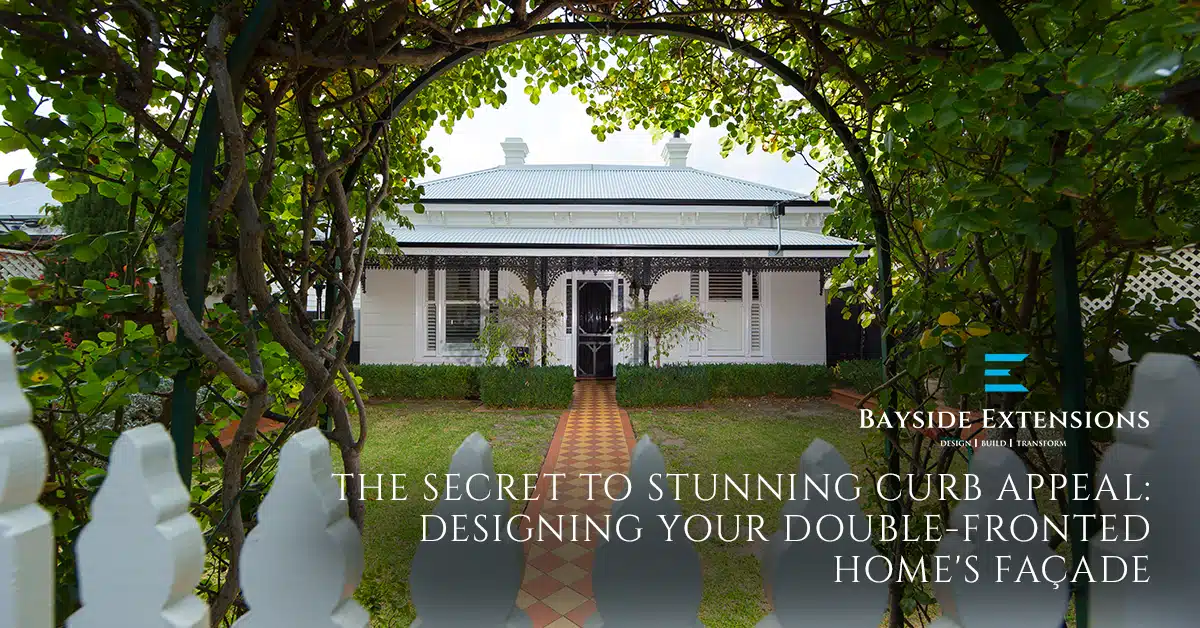
The Secret to Stunning Curb Appeal: Designing Your Double-Fronted Homes Façade

Picture this: You’re strolling through a leafy Melbourne neighbourhood, and a double-fronted home catches your eye. It’s not just the sheer beauty that stops you in your tracks – it’s the way its façade tells a story.

The charm, the details, the harmony – it all comes together in a symphony of design that whispers, “Welcome home.” The secret to creating this enchantment? It’s all in the art of designing your double-fronted home’s façade. Keep reading below to learn how to transform your double-fronted home today!

Embracing Architectural Harmony

Creating a captivating façade involves more than just superficial aesthetics. It’s about integrating the façade seamlessly with the overall architecture of your home. This means striking the balance between aesthetics and functionality, ensuring that the façade complements the interior spaces and serves as a fitting introduction to your home’s personality.

Architectural harmony can be achieved through both symmetrical and asymmetrical designs. A symmetrical layout exudes a sense of order and formality, while asymmetry brings contemporary charm. By experimenting with these design approaches, you can evoke a feeling that aligns with your personal style.

Material Magic: Choosing the Right Elements

Melbourne’s weather can be as diverse as its culture, so your façade materials need to weather the storm – literally. Opt for durable and weather-resistant materials that can withstand the city’s rain, wind, and sunshine. This not only ensures your home’s longevity but also minimises the need for frequent maintenance.

Textures and patterns breathe life into your façade. From smooth finishes to textured surfaces, every element adds a layer of intrigue. Incorporating patterns through materials like brick, stone, or timber can create captivating visual narratives that draw the eye and enrich the façade’s story.

The Colour Chronicles: Creating Impactful Palettes

Colours have the power to evoke emotions and personal flare (if regulations permit). When selecting colours for your façade, consider the personality you want your home to exude. Whether you opt for timeless neutrals or bold hues, ensure they reflect your home’s identity and resonate with your lifestyle.

Creating a visually engaging façade involves playing with contrasting and complementing colours. Contrasts can highlight architectural details, while complementary hues harmonise elements. By crafting a balanced colour palette, you can ensure that your façade pops while seamlessly blending into the neighbourhood’s ambience.

Double fronted house

Windows to the Soul: Crafting Striking Openings

Windows are more than functional openings – they’re design features. Frame views, enhance aesthetics, and allow light to dance across your façade. Strike a balance between transparency and privacy, letting your windows tell a story while inviting a glimpse into your home’s inner world.

Windows come in all shapes and sizes, each offering a unique aesthetic impact. Large, elegant windows can add an air of grandeur to your home, while unique shapes, like porthole or circular windows, infuse character into your façade. These windows can be artful expressions.

Landscape Enchantment: Greenery and Accents

Landscape and façade go hand in hand. Soften the transition between your home and the surroundings by framing your façade with carefully chosen plants. The integration of nature and architecture creates a cohesive and inviting look.

Landscape accents and lighting can transform your façade into a nighttime masterpiece. Illuminate architectural features with carefully placed lighting, and add decorative elements that showcase your taste. The interplay between light and shadow adds a touch of drama that enhances your home’s charm.

Crafting Entrances: Doors and Pathways

The front door isn’t just an entrance – it’s a statement. A well-designed front door showcases craftsmanship and style. Choose a door that reflects your home’s interior personality while making a memorable first impression on guests.

Pathways guide guests to your front door with elegance. They’re not just functional – they’re a design opportunity. From stone paths to garden-lined walkways, pathways create a visual journey that invites exploration.

Personal Touch: Reflecting Your Lifestyle

Infuse your façade with elements that reflect your lifestyle. Whether it’s a personalised mailbox, a handcrafted sculpture, or a unique door knocker, these details add personality and charm.

Blending nostalgia with modernity can create a façade that’s both timeless and current. Incorporate classic elements like vintage sconces or modern touches like sleek house numbers to strike the perfect balance.

Final Thoughts

The secret to a stunning curb appeal lies in the intricate art of designing your double-fronted home’s façade. It’s a harmonious blend of architectural elements, materials, colours, windows, landscaping, entrances, and personalised touches.

By carefully curating these aspects, you can create a façade that not only welcomes you home every day but also captivates the hearts of those who pass by. Your home’s façade is more than just a first impression; it’s a lasting story etched in design.

If you’re considering a home extension or renovation project for your double-fronted home, look no further than Bayside Extensions. Our team can guide you through the process, from design all the way to construction and completion, ensuring a seamless transformation that aligns with your vision.

Please call us on (03) 9596 0368 or leave an enquiry via our online contact form.

The Best Materials for Double Fronted Homes Sustainability and Aesthetics
CategoriesHome Extensions

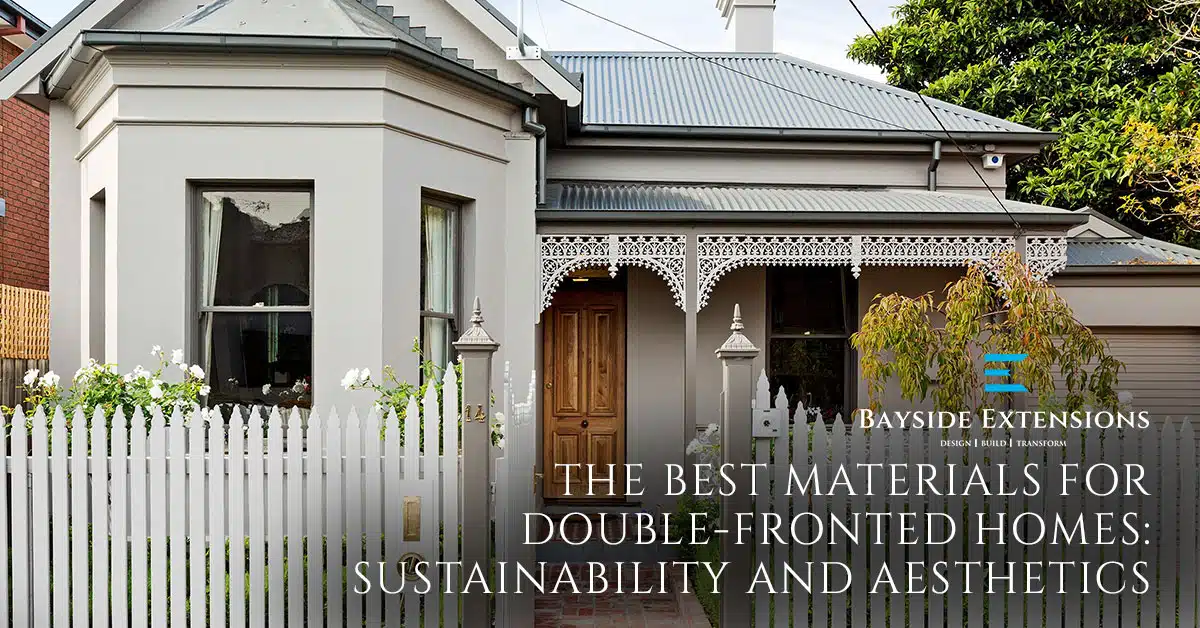
The Best Materials for Double-Fronted Homes: Sustainability and Aesthetics

Double-fronted homes, known for their distinctive architectural layout, have long captured the attention of homeowners and architects alike. These charming dwellings present a unique canvas for exploring the synergy between sustainability and aesthetics through thoughtful material selection.

As Melbourne residents embrace the concept of harmonising modern living with environmental consciousness, the choice of building materials becomes crucial. Please continue reading below to learn more today!

Traditional Building Materials: Timeless Appeal and Resilience

Brick, a stalwart in the realm of construction, offers more than just a façade – it embodies durability and longevity. The natural thermal mass of brick ensures optimal insulation, making it a practical choice for Melbourne’s fluctuating climate. Its ability to store heat during the day and release it at night contributes to energy efficiency.

Weatherboard, another classic choice, embraces versatility in design. Its horizontal lines can evoke both a traditional and contemporary aesthetic. While weatherboard homes exude charm, they also require regular maintenance to prevent weathering and ensure their longevity.

Modern Sustainable Choices: Embracing Eco-Friendly Alternatives

Embracing timber as a primary material aligns with sustainability goals. Timber is a renewable resource that actively sequesters carbon during its growth. Its use in cladding not only contributes to reduced carbon emissions but also allows for architectural ingenuity, adding warmth and character to double-fronted homes.

Choosing recycled or reclaimed materials adds a unique touch to your façade while minimising environmental impact. Salvaged wood, metal, or even repurposed industrial materials can create character-filled exteriors that tell a story of sustainability.

The Rise of Sustainable Composites: Balance and Performance

Fibre cement, a composite material, offers the durability of cement with the flexibility of wood. Its resistance makes it an attractive option for double-fronted homes. With minimal need for painting and maintenance, fibre cement offers long-term cost savings.

Engineered wood products combine natural fibres with resins, creating a balance between sustainability and engineered strength. These materials offer the warmth of wood without the concerns associated with deforestation. Their versatility allows for intricate designs that enhance the visual appeal of double-fronted homes.

Energy-Efficient Choices: Enhancing Comfort and Sustainability

Incorporating insulated panels into the design enhances thermal performance. These panels minimise heat transfer, reducing the need for excessive heating and cooling. Additionally, their streamlined construction process contributes to shorter build times.

Opting for high-performance glass and glazing not only maximises natural light but also improves energy efficiency. Double-glazed or low-emissivity glass helps regulate indoor temperatures, reducing reliance on artificial heating and cooling.

Modern Extension Ideas Period Houses Melbourne’s Bayside Suburbs

Incorporating Natural Elements: Blending Aesthetics and Nature

Stone façades offer an elegant and timeless look. Available in a variety of textures and colours, stone can complement both traditional and modern designs. Integrating stone into architectural features adds depth and character to double-fronted homes.

Green facades, adorned with climbing plants or living walls, present a unique approach to sustainability and aesthetics. These vertical gardens enhance air quality, reduce the urban heat island effect, and create a striking visual impact.

Regional Considerations: Adapting Materials to Melbourne’s Climate

In a city known for its varied climate, material choices should adapt to Melbourne’s weather patterns. Balancing insulation and ventilation ensures indoor comfort year-round, while materials resilient against extreme weather conditions guarantee long-lasting durability.

Opting for locally sourced materials reduces transportation-related emissions. Supporting local suppliers not only minimises the carbon footprint but also fosters a sense of community connection.

Collaborating with Architects and Designers: Expertise and Customization

Collaborating with architects and designers who specialise in sustainable design is essential. Their expertise ensures informed material choices that align with sustainability goals while achieving desired aesthetic outcomes.

Every double-fronted home has its own character. Collaborating with experts allows homeowners to customise materials to individual designs, creating residences that reflect their personality and values.

Final Thoughts

The journey to selecting the best materials for double-fronted homes involves a delicate balance between sustainability and aesthetics. From traditional choices like brick and weatherboard to modern composites and energy-efficient solutions, Melbourne residents have a plethora of options to create homes that harmonise with the environment and showcase their unique style.

By combining innovative materials with expert advice, homeowners can contribute to a more sustainable future while enjoying the beauty of their double-fronted abode.

If you’re considering a home extension or renovation project for your double-fronted home, look no further than Bayside Extensions. Our team can guide you through the process, from design all the way to construction and completion, ensuring a seamless transformation that aligns with your vision.

Please call us on (03) 9596 0368 or leave an enquiry via our online contact form.

Integrating Old and New Matching Home Extensions with Original Architecture
CategoriesHome Extensions

Integrating Old And New: Matching Home Extensions With Original Architecture

One of the challenges of home extensions is seamlessly blending the new addition with the existing architecture of the original structure. Whether you are planning to extend your home to create more space, enhance functionality, or add value, it’s important to consider how the new extension will complement the original design.

In this blog, we will explore the concept of integrating old and new by matching home extensions with the original architecture. If you’re planning a home extension project and want to ensure that the new addition blends seamlessly with your existing home, read on for expert insights and inspiration.

Preserving The Character Of Historic Homes

Historic homes are a treasure trove of architectural character and charm, and when it comes to extending them, it’s crucial to preserve their unique features. Here are some tips for matching new home extensions with the original architecture to maintain the character of historic homes:

Study the Original Architecture

Before planning for a home extension for a historic property, take the time to study and understand the original architecture. Pay attention to the architectural style, materials, proportions, and detailing of the existing home. This will help you create a design that complements the original architecture and seamlessly integrates with it.

Match Materials and Finishes

Use materials and finishes that match or complement the ones used in the original home. For example, if the original home has brick or stone walls, try to use similar materials for the extension to create a cohesive look. Pay attention to details such as window frames, mouldings, and roof materials to ensure they match or harmonise with the existing features.

Preserve Period Features

If the historic home has unique period features such as decorative mouldings, cornices, or mantels, make an effort to preserve them in the design of the extension. These features contribute to the character and charm of the home and should be retained wherever possible.

Respect Proportions and Scale

Historic homes often have specific proportions and scale that contribute to their architectural character. When designing a home extension, it’s important to respect these proportions and scale to ensure that the new addition complements the original home. Avoid adding extensions that overpower the original home, as it can disrupt the visual harmony of the property.

Seek Professional Advice

Designing home extensions for historic homes can be complex and require expert knowledge of architectural styles and conservation principles. It’s essential to work with experienced professionals who understand the unique challenges and requirements of historic homes. They can help you create a design that respects the character of the original home while providing the desired functionality and aesthetics of the new extension.

Harmonising Visual Flow In Modern Homes

Modern homes are known for their clean lines, minimalist design, and open floor plans. When extending a modern home, it’s crucial to maintain the visual flow and coherence of the overall design. Here are some tips:

Consistent Design Language

Use materials, colours, and finishes that are consistent with the existing home to create a seamless transition between the original structure and the new addition.

Open Floor Plan

Ensure that the layout of the extension complements the flow of the existing space and maintains the sense of openness and connectivity.

Natural Light

Avoid blocking or obstructing natural light sources and use glazing or other design elements that allow ample daylight to filter into both the existing home and the new extension.

Minimalism and Simplicity

Opt for simple and streamlined design features that harmonise with the overall design language of the existing home.

Functional Integration

Ensure that the layout, storage, and functionality of the extension align with your requirements and will complement the overall design of the home.


Extension Ideas Period Homes

Designing Extensions For Period Homes

Period homes, with their unique architectural features and historic charm, require careful consideration when planning an extension or home renovation to ensure that the new addition complements the original design. Here are some key considerations for designing extensions for period homes:

Respect the Existing Style

It’s important to understand and respect the architectural style of the period home when designing an extension. Consider elements such as roof pitch, materials, window styles, and decorative details to ensure that the new addition blends seamlessly with the existing home.

Preservation of Historic Features

Period homes often have unique features, such as ornate mouldings, original doors, or stained glass windows. Consider how the new extension can preserve or complement these features, rather than detracting from them.

Scale and Proportion

Ensure that the scale and proportion of the extension are in harmony with the existing home. Avoid oversized or mismatched additions that may disrupt the overall visual balance and proportion of the period home.

Modern Comforts and Functionality

While preserving the historic features of the period home is important, it’s also crucial to incorporate modern comforts and functionality into the design of the extension. Consider your lifestyle needs and how the new addition can enhance the overall livability of the home.

Creating A Cohesive Design Language

Consistency in design elements is crucial to create a cohesive look and feel throughout the home. This includes elements such as the choice of materials, colours, patterns, and textures. Consider using materials and finishes that are consistent with the original home, while also providing a modern touch that complements the new extension.

Harmonising Visual Flow

The visual flow from the existing home to the new extension should be seamless and harmonious. Pay attention to the layout, proportions, and sight lines to create a smooth transition between the old and new spaces. Avoid abrupt changes in design styles or elements that can disrupt the overall visual flow.

Complementary Design Styles

While the new extension may have a contemporary design, it’s important to ensure that it complements the overall design style of the existing home. Consider the architectural features, era, and design elements of the original home, and find ways to integrate these into the new addition. This can be achieved through careful selection of materials, finishes, and design details.

Attention to Detail

Attention to detail is crucial in creating a cohesive design language and to ensure you get the best possible outcome and quality. Consider elements such as trim work, mouldings, hardware, and lighting fixtures to ensure that they are consistent with the overall design language of the home. Small details can make a big difference in achieving a cohesive and polished look.

Functionality and Flow

The design language should not only be visually appealing but also functional and practical. Consider your needs and how the new extension can enhance the functionality and flow of the home. This may include considerations such as layout, storage, and accessibility.

Collaboration with Design and Build Professionals

Working with experienced design and build professionals, can be invaluable in creating a cohesive design language for home extensions. They can provide expert guidance and insights to ensure that the new addition integrates seamlessly with the existing architecture and design style of the home.

Final Thoughts

Integrating old and new architecture in home extensions requires careful consideration of design elements, attention to detail, and a cohesive design language. At Bayside Extensions, our Architecture and Design team can help you to create a stunning and functional home extension that seamlessly integrates with your home’s original architecture. Contact us today to discuss your project and enhance the beauty and functionality of your home!

Please call us on (03) 9596 0368 or leave an inquiry via our online contact form.

Open floor plans in home renovations
CategoriesHome Extensions

The Benefits Of Open Floor Plans In Home Renovations

In today’s modern world, open floor plans have become increasingly popular in home renovations. The traditional concept of dividing rooms with walls has given way to a more spacious and versatile approach.

Open floor plans offer a range of benefits that not only enhance the aesthetics of a home but also transform the way we live and interact within our living spaces. In this article, we will delve into the many benefits of open floor plans and explore how they can enhance your living experience.

Enhancing Space and Natural Light

One of the key advantages of open floor plans in home renovations is the enhancement of space and natural light. By removing walls and creating a more open layout, the entire area feels more spacious and airy. The absence of barriers allows for a seamless flow between different areas, creating a sense of freedom and expansiveness.

Additionally, open floor plans enable natural light to permeate throughout the space, illuminating every corner. With fewer walls obstructing the passage of light, rooms are bathed in natural sunlight, creating a warm and inviting atmosphere. The abundance of natural light not only enhances the aesthetic appeal of the space but can also contribute to the overall well-being and mood.

Improved Social Interaction and Connectivity

Another significant benefit of open floor plans is the improvement in social interaction and connectivity among family members. By eliminating walls that separate the living room, dining area, and kitchen, family members can easily engage in conversations and activities across different spaces. Whether it’s cooking in the kitchen while chatting with guests in the living room or supervising children while working in the study, open floor plans foster a sense of togetherness and connectedness.

Furthermore, open floor plans encourage more social gatherings and entertainment. With a seamless flow between spaces, hosting parties and events becomes effortless and enjoyable. Guests can freely move around, interact with one another, and partake in various activities without feeling confined to separate rooms. Openness and connectivity become the foundation for creating memorable social experiences within the comfort of your own home.

Flexibility and Adaptability

One of the remarkable advantages of open floor plans in home renovations is the flexibility and adaptability they offer. With fewer walls and partitions, the layout becomes more versatile, allowing you to easily rearrange furniture, change room functions, or repurpose spaces as your needs evolve over time. Whether you want to create a home office, a play area for children, or a yoga studio, open floor plans provide the flexibility to adapt the space to suit your lifestyle.

Furthermore, open floor plans facilitate better traffic flow within the home. Without walls obstructing movement, navigating from one area to another becomes seamless and effortless. This is especially beneficial in households with children or elderly family members, as it eliminates barriers and potential obstacles, promoting a safer and more accessible environment.

White and wood modern kitchen interior design

Enhancing Visual Appeal and Design Flow

Another significant advantage of open floor plans is their ability to enhance the visual appeal and design flow of your home. You can create a sense of continuity and harmony in the space, allowing your eyes to effortlessly move from one area to another. This uninterrupted visual flow creates a cohesive and aesthetically pleasing environment.

Open floor plans also provide an opportunity to showcase your interior design choices and personal style. With a larger expanse of uninterrupted space, you have more freedom to play with furniture arrangements, incorporate statement pieces, and create focal points that draw attention. The absence of walls allows for better integration of colours, textures, and patterns, resulting in a more cohesive and visually appealing design scheme.

In addition, open floor plans offer the opportunity to showcase architectural features and views. With fewer obstructions, you can take advantage of panoramic windows, architectural details, or a stunning fireplace as focal points that capture attention and add character to the space.

Multifunctional Spaces

One of the key benefits of open floor plans in home renovations is the creation of multifunctional spaces. With fewer walls dividing the rooms, you have the opportunity to design versatile areas that serve multiple purposes. Whether you want to combine your living room with a home office or integrate a dining area with a playroom for your children, open floor plans provide the flexibility to accommodate various activities within the same space.

By embracing multifunctionality, you can maximise the use of your home and make the most of every section. It allows for seamless transitions between different activities, promoting a more efficient and dynamic lifestyle. For example, you can easily entertain guests while preparing meals in an open kitchen, or keep an eye on your children playing in the adjacent area while you work or relax.

Moreover, multifunctional spaces foster a sense of togetherness and connectivity among family members. With open floor plans, everyone can engage in different activities while still being in close proximity, promoting social interaction and bonding.

Final Thoughts

Open floor plans offer a multitude of benefits in home renovations. They enhance space and natural light, improve social interaction and connectivity, provide flexibility and adaptability, and enhance visual appeal and design flow. Additionally, open floor plans allow for the creation of multifunctional spaces that cater to the diverse needs of modern living.

If you’re considering a home renovation project to incorporate an open floor plan, look no further than Bayside Extensions. Our team can guide you through the process, from design to construction and completion, ensuring a seamless transformation that aligns with your vision. Contact us today to schedule a consultation and take the first step towards creating an open, functional, and beautiful home that truly reflects your lifestyle.

Please call us on (03) 9596 0368 or leave an enquiry via our online contact form.

home extension design by Bayside Extensions
CategoriesHome Extensions

Designing A Home Extension: Key Factors To Consider

It can be complex yet exciting to design a home addition. There are numerous factors to think about, ranging from choosing the purpose of the extension to deciding on the design and layout. You should approach the project with careful planning and attention to detail whether you want to expand your kitchen, add more living space, or build a home office.

Budget, regulations, and design options are just a few of the important things to take into account when planning a home addition that we’ll discuss in this blog post. The process of designing the ideal addition for your home should be made easier for you with the help of this guide.

1). Budget And Financing

Budget and financing are two important factors to take into consideration when planning a home addition. It’s critical to have a firm understanding of your project’s budget and financing options.

Conducting research and finding a building company that does everything in-house – from the initial concept design all the way through to construction and completion means that a design will be created based on your budget.

That’s where Bayside Extensions comes in. One of the many advantages of working with Bayside Extensions is that we do everything in-house. From the initial concept design with our talented architecture and design team all the way through to construction with our highly-skilled trades and to completion. Additionally, we have established relationships with suppliers and contractors, which are all factors to help you to achieve your dream home extension.

2). Purpose And Functionality

When considering a home extension, it is important to determine the purpose and functionality of the additional space. Are you adding a new bedroom or bathroom? Are you creating a larger living space or a new home office? Identifying the specific purpose of the extension will guide the design process and ensure that the final product meets your needs.

At Bayside extensions, we understand the importance of purpose and functionality when it comes to home extensions. Our experienced architecture and design team work closely with clients to understand their specific needs and create a design that not only adds space but also enhances the overall functionality of their home.

Whether you need a home office, a playroom for your children, or a guest bedroom, we can help you create a space that meets your needs and fits seamlessly with the existing style of your home. Our team can also advise on the best use of space to ensure that you get the most out of your new extension.

Modern house living room interior

3). Planning And Permits

One of the most important aspects of designing a home extension is obtaining the necessary permits and approvals. This can be a complicated and time-consuming process, but it is essential.

At Bayside Extensions, we have extensive experience in navigating the planning and permit process. Our team can obtain all the necessary approvals and permits required on your behalf, including building permits, planning permits, and other necessary documentation.

Therefore, when you work with Bayside Extensions, you can rest assured that your home extension will be designed and built to the highest standards, and that all necessary permits and approvals will be taken care of.

4). Materials And Design

Choosing the right materials and design is crucial when it comes to creating a home extension. The materials you choose can impact the durability, energy efficiency and overall aesthetic of your extension. Similarly, the design can affect the functionality and flow of your space.

At Bayside Extensions, we pride ourselves on using high-quality materials to create the perfect extension for your home. We can work with you to choose the right materials for your specific needs and budget, whether you want a traditional or modern look.

Our architecture and design team will also work with you to create a design that not only looks beautiful but also meets your needs in terms of space and functionality. We understand that each home and homeowner has unique requirements, which is why we take a personalised approach to each project.

5). Finding The Right Builder

This is a crucial step in ensuring that your vision for your home is brought to life. When it comes to finding the right builder, it’s important to do your research and choose a reputable and experienced company.

That’s where Bayside Extensions comes in. High-quality workmanship and excellent customer service are just some of the many reasons to choose Bayside Extensions. With decades of experience in the industry, we have a team of skilled professionals who can help you with every step of the design and construction process.

One of the benefits of working with Bayside Extensions is that we use only the best materials and construction techniques to ensure that your extension is built to last. From the foundation to the finishing touches, every aspect of the construction process is carefully planned and executed to ensure that you are left with a beautiful and functional space that you can enjoy for years to come.

The team at Bayside Extensions will work closely with you to ensure that everything is done to your satisfaction. We will keep you updated on the progress of the project every step of the way. With our commitment to quality and customer service, you can be confident that your home extension project is in good hands.

Final Thoughts

Designing a home extension can be a complex process that requires careful consideration of several factors. From budgeting to materials and design, every decision made can have a significant impact on the outcome of the project. Therefore, it’s important to work with an experienced and reliable team who can guide you through every step of the process.

If you’re considering a home extension, don’t hesitate to get in touch with Bayside Extensions today. We would love to discuss your project and provide you with an obligation-free consultation. With Bayside Extensions, you can rest assured that your home is in good hands.

Please call us on (03) 9596 0368 or leave an inquiry via our online contact form.

Benefits Of Adding Second Storey
CategoriesHome Extensions

The Benefits Of Adding A Second Storey To Your Home

Do you feel confined in your house but adore the neighbourhood and would love to stay put? If you have been thing about a home extension,  might be time to think about building an additional storey on your house. This popular renovation option offers numerous benefits, including increased living space, enhanced functionality, increased home value, and more natural light and views. To assist you in determining whether a second-storey addition is the best option for your needs, we’ll go into greater detail about each of these benefits in this article.

1). Increased Living Space

One of the most significant benefits of adding a second storey to your home is the added living space. Without essentially enlarging the footprint of your home, you can significantly increase the size of your house (if permitted). This is particularly beneficial if you live in a suburb where the lots are small, and you want to stay in your current neighbourhood.

A second-storey addition can provide a number of options for new living space, including a childrens’ wing, an additional living space/retreat, or even a larger master suite with an ensuite bathroom and a walk-in-robe. It’s an opportunity to redesign your living space’s layout so that it has a more open and contemporary feel.

Your family, hobbies, and options for working from home can all be accommodated with more living space. A second-storey addition can be the ideal way to adapt to our changing lifestyles.

2). Enhanced Functionality

Enhancing functionality is just one of the many advantages of adding a second storey to your house. The additional storey can be used to increase more practical living spaces, like extra bedrooms, bathrooms, and recreation areas. Growing families or people who frequently host guests may find this to be especially helpful.

You can designate a space for a home office or a kids’ playroom when you add a second storey to your house. As a result, there will be a more enjoyable environment for kids to play while the workplace will be more focused and productive.

Furthermore, a second storey can divide living spaces, enhancing privacy and peace in the house. Families with children or those with multiple generations living together will find this to be especially beneficial. If someone needs a quiet place to work or unwind, they can find one on the second floor, while the ground floor can be used for more communal living spaces.

Additional storage space may be available as a benefit of improved functionality. A second storey allows you the opportunity to add more storage spaces. By doing this, you can lessen clutter and maintain an organised, clean home.

Furthermore, a second storey may offer more outdoor space. With breathtaking views of the surroundings, a rooftop deck or balcony can be the ideal place to unwind and enjoy the great outdoors (if regulations permit). 

Benefits Of Adding Second Storey

3). Increased Home Value

Your home’s second-floor addition may be a wise investment because it has the potential to significantly raise the value of your property. A second floor can increase living space, improve functionality, and enhance the appearance of your home as a whole. The benefits don’t stop there, though; it can also raise the value of your house.

A second-storey addition can increase the value of your house for a number of reasons. First of all, it expands your property’s square footage. Potential buyers may find additional living space to be appealing, especially in areas with a high demand for homes. Your family may feel more at home in your home thanks to the additional space, which will also make it more enjoyable to live there.

The functionality of your home can also be improved by a second-storey addition. You could increase the practicality of your home by, for instance, adding extra bedrooms, bathrooms, or a home office. This can also raise the value of your home because it will appeal to more buyers who are searching for a practical and cosy living space.

A second-storey addition can also give your house an updated, modern look that will also increase its value. Buyers seeking a modern, aesthetically pleasing home may be drawn in by an updated, contemporary appearance.

Last but not least, a second-storey addition may offer you the opportunity to add features like additional storage or additional outdoor areas that can raise the appeal and value of your house.

4). More Natural Light And Views

Your home may gain more natural light and views if you add a second storey in addition to expanding the living area and improving functionality. You can significantly increase the amount of natural light that enters your home and make it feel lighter and more inviting by installing additional windows and skylights on the second floor.

Additionally, increased natural light has health advantages. Natural light exposure has been connected to increased mood, increased productivity, and better sleep. You can take advantage of these advantages while relaxing in your own home with a second-storey addition.

Adding windows to the second floor can also offer breathtaking views of the surroundings. A second storey can give you a better vantage point from which to take in the views if your home is situated in a region with stunning scenery. Additional natural light can also be added to your home by installing skylights. 

In addition to the aesthetic advantages, increasing the amount of natural light and views in your home can help you save money on energy expenses. Increased exposure to natural light will lessen the need for artificial lighting during the day, which will lower your electricity costs and you can become more energy efficient.

Final Remarks

Increased living space, improved functionality, a rise in home value, and an increase in natural light and views are just a few advantages that come with adding a second storey to your house. You can give your family a more comfortable living space that accommodates their changing needs by adding on to your house. A second-storey addition can also significantly raise the value of your house, giving you a return on investment that you can enjoy for many years.

Working with seasoned experts like us at Bayside Extensions who can walk you through the process if you’re thinking about building an additional storey on your house. With the right Design and Build team, you can achieve a stunning, practical, comfortable, and modern addition to your house that you will cherish for many years to come.

Please call us on (03) 9596 0368 or leave an inquiry via our online contact form.

Add to cart
Contact Us